

Local Wildlife
The unique mix of soils present in Worcester, combined with its place straddling the River Severn, lends itself to a vibrant landscape with enormous potential for wildlife to live alongside us. You may have seen the lesser horseshoe bats flying from the cathedral, slow-worms or hedgehogs using the parks, or otter and water voles swimming in the river and canal. Since the times in which the traditional pear orchards for which the city became famous were planted, people have been working with nature in Worcester for a city where both can thrive
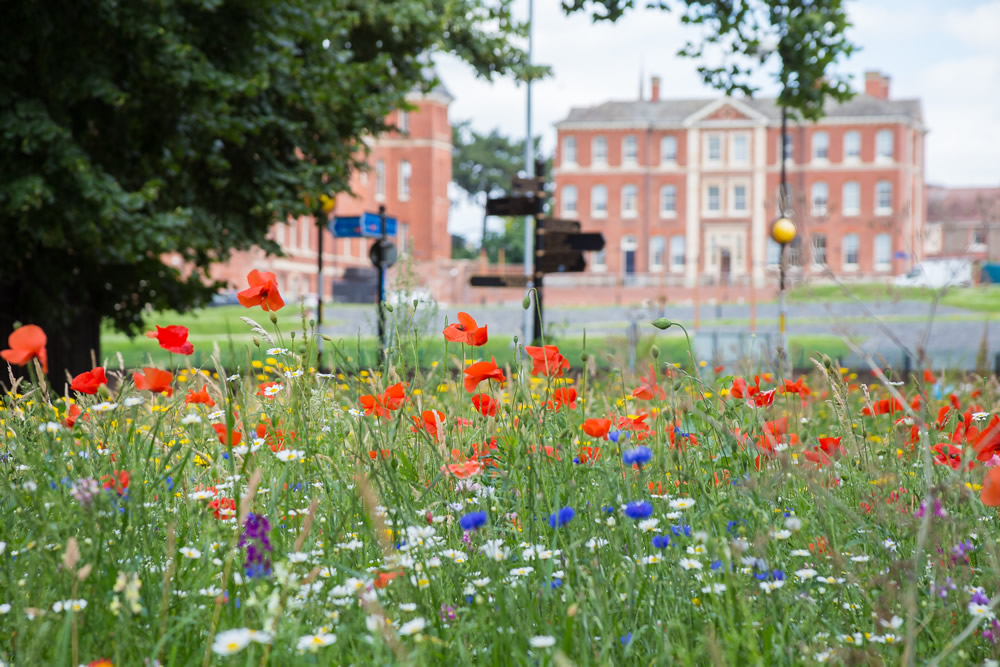
Wildflowers on Croft Road
The City Council’s conservation team manages 18 wildlife sites in Worcester, including an internationally important site for great crested newts. For more information and where to find these, see the parks and green spaces page.
Our commitment to enhancing biodiversity
While there are plentiful opportunities for wildlife, biodiversity in Worcester as in the rest of the UK is under threat from pressures both local (such as habitat loss and fragmentation) and global (such as climate change). Worcester City Council has begun taking steps to alleviate these pressures, declaring a biodiversity emergency in 2020 and recognising that urgent action is needed to halt the decline of our native species. This has been further strengthened nationally by the Environment Act 2021, requiring that public authorities in England must create and deliver policies to protect and restore biodiversity. An initial action for Worcester was agreed by the Environment Committee in November 2023 and the City Council is now working on a full biodiversity strategy to guide our approach to nature restoration for the period 2025-2030.
Over the past few years the City Council has begun work to enhance biodiversity across all green spaces that we manage, including nature reserves, parks, allotments, cemeteries, and road verges. These initiatives have included improving the way we look after our grass and hedgerows several of which have been seeded with wildflowers and allowed to bloom into meadows which will support pollinating insects and many other species. Tree planting has also been a key initiative for the City Council in recent years. Not only do trees provide a home for wildlife, they also play an important role in removing carbon dioxide from the atmosphere and provide significant mental health benefits for residents.

Brett D'Oliveira, Worcestershire County Cricket Club Captain, helps to plant a tree as part of the Platinum Jubilee
The City Council is proud that five of the parks and green spaces we manage have achieved the prestigious Green Flag status, the latest being Astwood Cemetery. A key judging criteria of this award is the appropriate management and conservation of natural features, wildlife, and flora. The grounds at Astwood, for example, include a natural burial area, which is managed using techniques that promote wildflower growth across the entire site, as well as bat and bird boxes, mammal hides, a solar-lit brook and even beehives. The grounds also include a Covid memorial area called the Forget You Not Garden; in its centre is a stone post-box designed to look like a beehive, and visitors are invited to write messages to their loved ones on notelets made from recycled paper and infused with wildflower seeds, and then post them into the letterbox. The notelets will then be planted into the garden, allowing the wildflowers to grow into a lasting memorial. Compost bays are in use at all our parks so that garden waste can be composted and used on flower beds as mulch and as a soil improver for the annual bedding. As part of its commitment to biodiversity on a wider scale, the City Council has not used peat for over ten years.
The Wild about Worcester Way
Worcester Environmental Group, supported by the City Council, has established a way-marked route around Worcester, helping residents to explore wild spaces in the city, learn about nature and improve their physical and mental health. This route is also a wildlife corridor, allowing species to move freely from one area to another.
What you can do for nature in Worcester
The City Council only owns and manages a small proportion of the total land area in Worcester. If you are interested in helping the recovery of Worcester’s Wildlife, there
is a lot that you can do in your own garden or local area.
- Ponds are a huge benefit to not only aquatic life (such as great crested newts) but also to mammals and birds as drinking water, and to insects like dragonflies that need water to breed. The Freshwater Habitats Trust has a great collection of resources on how to build ponds – and you only need a pond the size of a washing-up bowl to make a difference.
- Take part in No-Mow May in your garden, or even no-mow-summer! By making sure you mow your garden only a few times, at the right times of year, you can save yourself work and do a lot for wildlife.
- Planting a tree - although it is important to ensure that the right trees are in the right place so that other wildlife aren’t negatively affected.
- Setting up a home for animals, whether a bird box, bat box, or hedgehog hotel. Make sure to follow the manufacturer’s instructions so that you have the best chance of them being used.
- Make a hedgehog hole in your fence, to allow small animals like hedgehogs to move around the landscape freely.
- For more advice, see:
Groups
Much of what has been done for wildlife in Worcester would not have been possible without the work of passionate and engaged volunteer groups and charities, including:
- Worcestershire Wildlife Trust
- Worcester Environmental Group
- Severn Rivers Trust
- Canal & River Trust
- Worcester Cathedral Eco Group (and peregrine falcons)
- “Friends of” park groups
Joining one of these groups is a great way to work towards nature’s recovery on a wider scale. Consider volunteering to help with a variety of projects like litter picks, planting orchards, and caring for meadows. If you need finances for a local project, you can apply to Worcestershire County Council’s Natural Networks fund.